Explainer
Vitamin D: how much do you really need?
The NHS advises that adults consider a daily supplement of 10 micrograms (400 IU) of vitamin D, especially in autumn and winter when sunlight is too weak to make enough through the skin, and some people are advised to take it all year. 10 micrograms equals 400 IU. The NHS also advises not taking more than 100 micrograms a day unless a clinician recommends it. This is information, not medical advice.
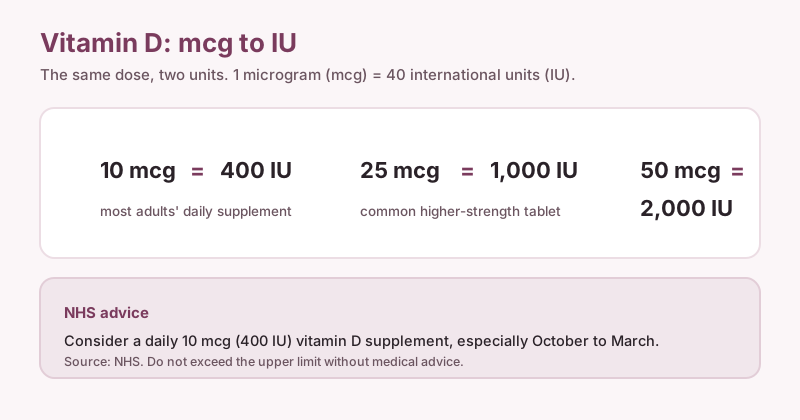
The NHS daily amount
The clearest figure to anchor to is the NHS advice that adults consider a daily supplement containing 10 micrograms of vitamin D. This is one of the few supplement recommendations the NHS makes for the general population, which is why it is worth knowing precisely. It applies to most adults, with some groups advised to take it throughout the year rather than only in the colder months.
Micrograms and IU
Vitamin D is labelled in micrograms (mcg) and international units (IU), and the conversion trips a lot of people up. 10 micrograms equals 400 IU. So a routine daily amount is 10 mcg or 400 IU, while a product labelled 1000 IU contains 25 micrograms, which is more than the routine NHS figure. Checking the conversion lets you compare products on a like-for-like basis.
Autumn and winter, and who needs more
From roughly October to March, UK sunlight is too weak for the skin to make vitamin D, which is why the NHS focuses its supplement advice on autumn and winter. Some groups, including people who are rarely outdoors and those who keep most of their skin covered, are advised to supplement all year. The EFSA-authorised roles for vitamin D include contributing to the maintenance of normal bones and muscle function and to the normal function of the immune system; these are general nutritional roles, not treatments.
The safe upper limit
More is not better. The NHS warns that taking too much vitamin D over a long period can be harmful, and advises adults not to take more than 100 micrograms a day unless a clinician recommends it. Stick to label guidance, avoid doubling up across a multivitamin and a separate vitamin D, and speak to your GP or pharmacist before taking high-strength products, especially in pregnancy.
Who suits a higher-strength product?
Not every vitamin D product on sale is dosed at the routine 10 microgram (400 IU) figure. Some are higher-strength, for example 2,000 IU (50 micrograms) a day, five times the routine amount. That is still within the NHS's 100 microgram upper limit above, so it is not automatically unsafe, but it is a different decision from the standard autumn-winter supplement. Higher-strength products tend to suit people with a higher need: someone found to have low vitamin D on a blood test, or advised by a GP, midwife or dietitian to take more than the routine amount, for example. They are not a better default for someone with no particular reason to think their needs are higher. If you are not sure which strength is right for you, check with your GP or pharmacist rather than picking the highest number on the shelf.
Read more
For forms, sources and named UK brands, see our guide to vitamin D and the best vitamin D supplement UK roundup. Vitamin D matters at every stage, from pregnancy and postnatal through to the senior years. Verified figures are gathered on our UK women's health statistics page.
Frequently asked questions
How much vitamin D should I take a day?
The NHS advises that adults consider a daily supplement containing 10 micrograms (400 IU) of vitamin D, particularly in autumn and winter when sunlight is limited. Some people are advised to take it all year. This is general advice; if you are unsure about your own needs, ask your GP or pharmacist.
What is 10 micrograms in IU?
10 micrograms of vitamin D equals 400 international units (IU). Labels in the UK may show either or both, so checking the conversion helps you compare products. A product labelled 1000 IU, for example, contains 25 micrograms, more than the routine NHS amount.
Why is autumn and winter singled out?
In spring and summer most people in the UK make enough vitamin D from sunlight on the skin. From about October to March the sunlight is too weak for this, which is why the NHS focuses its supplement advice on autumn and winter. Some groups are advised to supplement all year.
Can you take too much vitamin D?
Yes. The NHS warns that taking too much vitamin D over a long period can be harmful, and advises adults not to take more than 100 micrograms a day unless a clinician recommends it. Stick to label guidance, do not double up across products, and ask your GP or pharmacist before taking high-strength products, especially in pregnancy.
This is information, not medical advice, and is not a substitute for a registered clinician. Always read product labels and speak to your GP or pharmacist before starting a supplement. Source: NHS, Vitamin D (nhs.uk).
We sell this in our store

Vitamin D3 2,000 IU
Her Vitals' own vitamin D3 is one such higher-strength product: 2,000 IU (50 micrograms) per daily softgel. As explained above, that is within the NHS's 100 microgram upper limit but well above the routine 10 microgram amount, so it suits people who have been found to need more, not a default starting dose.
Sold by us directly from our own Shopify store, disclosed here as our own product like any other. This is a direct sale by us. It does not win our roundups or calculators automatically. Check our price against any other product with the cost-per-effective-dose calculator.
Editor, Her Vitals
Oliver leads Her Vitals's editorial coverage of women's life-stage health and supplements. He curates and reviews existing branded products across trying to conceive, pregnancy, postnatal, perimenopause, menopause and the senior years, weighing what the evidence supports against guidance from bodies such as EFSA, the NHS and NICE, and is clear that the content is information rather than medical advice.
Clinically reviewed by TribElle Clinical Team, an independent GPhC-registered pharmacy. Confirms clinical accuracy against published guidance; not an endorsement of Her Vitals or its products.